

Welcome
Antalya Car Rental | Antalya Airport Rent a Car
Recently viewed cars
128,26 €

125,25 €

125,25 €
109,22 €

70,14 €
Guzelyurt Neighborhood, Incikpinari Street No.188/4A Aksu/Antalya TURKEY
Hours: 08:00 - 22:00 Mon - Sat
info@mietwagenauto.com
Blog
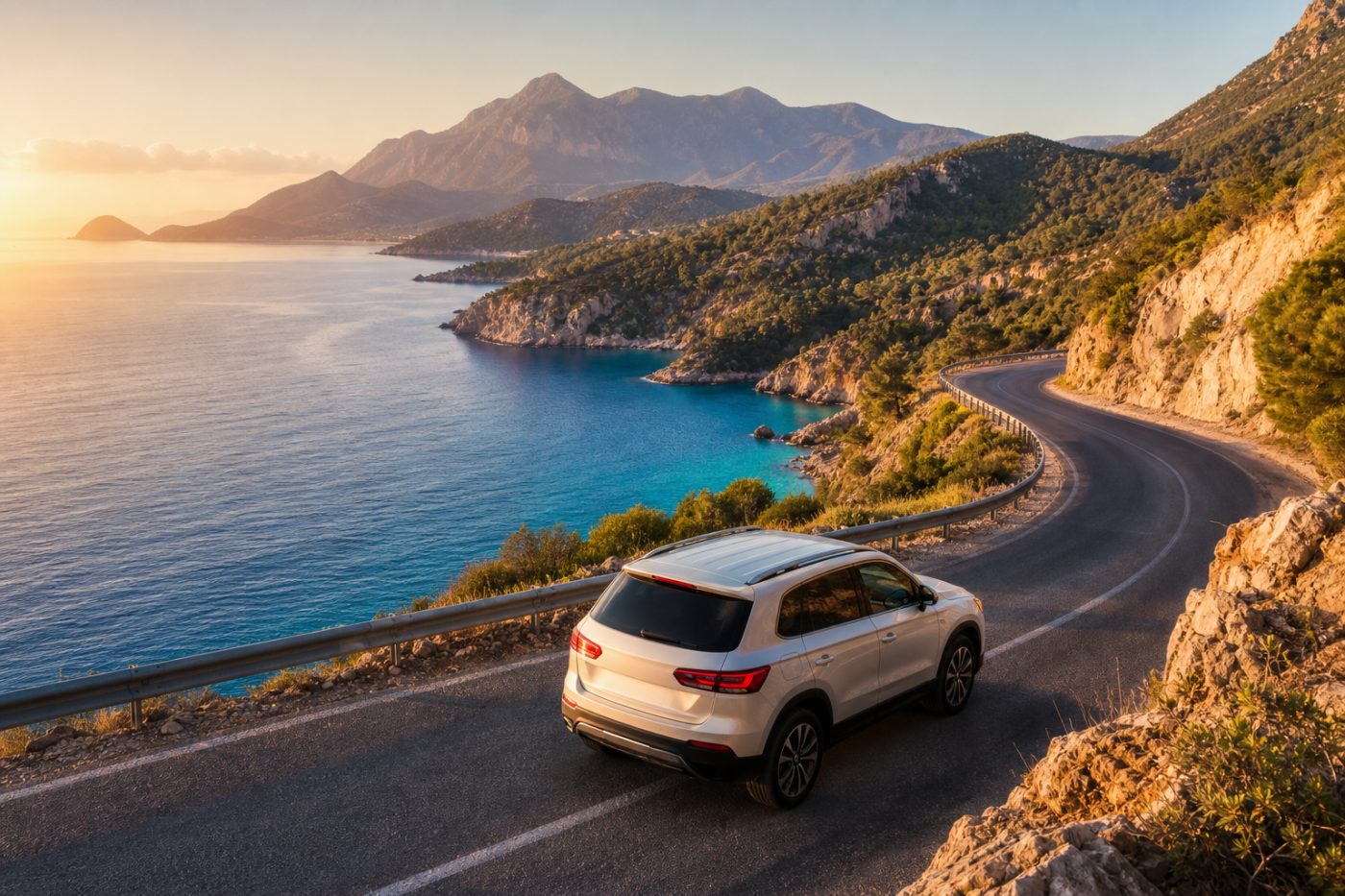
A hire-car coastal route from Antalya toward Kaş and Fethiye is the flexible way to see one of Turkey's most photographed road belts in daylight. Coaches fix stop times; your own car allows an extra ten minutes on a Kalkan hairpin, lunch on the Patara dunes or dinner in Kaş harbour without apologising to a tour guide. This guide walks the main axis from Antalya westward, fuel and timing habits, driving the bend-heavy sections, and return or one-way scenarios. No fixed duration promise—traffic, stops and roadworks move the clock.
Most drivers follow the D400 coastal band. From the city or AYT, you cross the Lara–Kundu hotel strip, then the Kemer shoulder and mountain edge. Our Kemer article details westbound bends and tunnels. After Kemer the road runs closer to the sea—Phaselis, Adrasan bay and the Olympos turn-offs are day-trip candidates. Guests starting east in Alanya or Side can run the map in reverse; their traffic notes still apply.
Non-stop Antalya–Kaş driving is usually quoted in the three-to-four-hour band depending on traffic and limits; one sitting without breaks is tiring. Tea in Kemer, a citrus-line pause near Finike or Kumluca, and a view stop above Kalkan before dropping into Kaş are sensible breaks. Kalkan's lanes and parking pressure exhaust drivers in August—leave the car in an outer lot and walk in for a calmer evening. Kaş fits diving shops, lemon restaurants and boat piers in the same day if you pace yourself.
Update fuel planning as you move west; some cove turn-offs have sparse stations. If the contract is full-to-full, topping up in Kumluca or Kemer on the return beats hunting pumps at midnight. Insurance and excess still apply on a long coastal day—a mirror scuff in a Kalkan alley becomes an excess conversation.
Kaş–Fethiye looks short on the map but carries dense bends. The Ölüdeniz turn is popular; in summer parking and foot traffic punish midday unless you arrive early or late afternoon. Kabak or Butterfly Valley sometimes wants a boat or hike—park on the upper road and plan. Fethiye centre hunts for bays near the bazaar and marina at dusk. Stretching the whole axis into one day turns holiday into homework; two nights in Kaş or one in Kalkan and Fethiye lets the road breathe.
Antalya–Kaş–Antalya in a single summer day is possible with long daylight but miserable if you skip stops. Two Kaş nights or a Kalkan/Fethiye split restores the point of driving. Winter long-stay guests can treat it as a weekend bolt-on—see our off-season long-term guide. One-way return—collect Antalya, leave Kaş or Fethiye—must be written on the booking per the one-way article.
Guests from Belek or Side join the route from the east; slot a rest day from the golf holiday car guide if clubs fill the boot. An automatic saloon or compact SUV from the fleet list balances comfort and Kalkan alleys better than an oversized SUV.
Corporate days needing invoices pair with business travel daily hire. Check daily kilometre caps on the contract before a long western run. If you loop back to Antalya, work return time backwards from check-in.
Non-stop is often quoted around three to four hours; roadworks and summer traffic extend it. With stops, allow half a day or more.
No—many drivers enjoy control on the bends. Automatic reduces fatigue in queues; preference, not rule.
Kemer promenade, Phaselis open ruins and Patara dunes work for children. Ölüdeniz at peak hours is stressful.
One-way may be available depending on date and fleet. Name both points on the reservation; the fee appears on the quote.
The Antalya–Kaş–Fethiye hire route rewards patience: two nights, walking Kalkan, fuel planned at main towns, one-way needs booked early. That is how the coast becomes yours—not the coach timetable.


